0
Items
$0.00

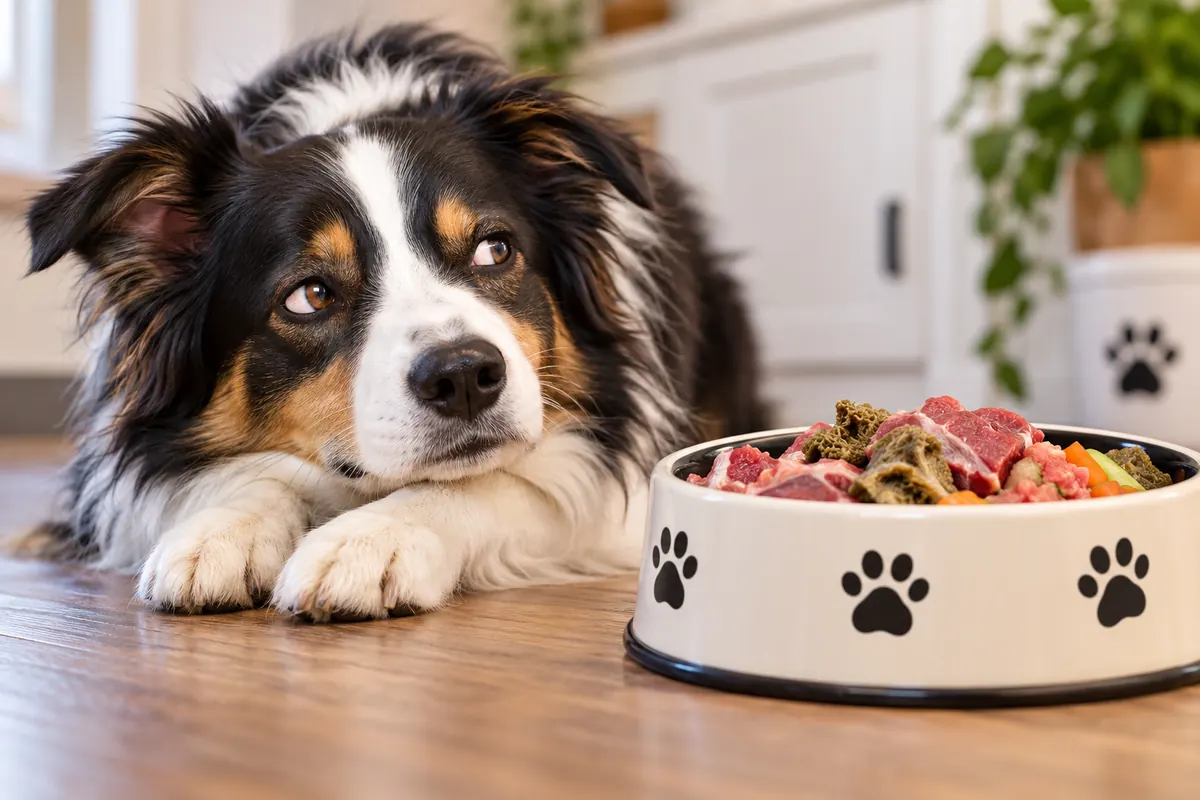
You’ve prepared your dog’s dinner, put their bowl down and waited for the usual enthusiastic response.
But instead of diving in, your dog gives it a sniff, looks at you and walks away.
Excuse me?
Yesterday, they practically inhaled the same meal. Today, apparently, it’s beneath them.
So why do dogs suddenly refuse their food? Are they just being fussy, or is something else going on?
Let’s investigate!
Just like us, dogs don’t always have the same appetite every day.
A dog that’s had less exercise than usual may not be as hungry. Extra treats, chews or leftovers can also make a surprisingly big difference.
And some dogs quickly learn that refusing dinner occasionally results in something much more exciting appearing.
Why eat your regular dinner when there’s a possibility of roast chicken?
However, it’s important not to assume that a sudden loss of appetite is simply fussiness. Illness and pain are common reasons dogs stop eating.
Dogs can be sensitive to changes in their diet.
A different protein, texture, smell or temperature may make a meal less appealing.
Some dogs happily eat anything you put in front of them.
Others seem to believe they’re restaurant critics.
If you’ve recently changed your dog’s food, consider whether the new food agrees with them.
When changing diets, a gradual transition over several days is often helpful, unless your vet has advised otherwise.
Dental problems are a surprisingly common reason for changes in eating behaviour.
Dogs with painful teeth or gums may:
Some dogs continue eating despite significant dental pain, so a normal appetite doesn’t rule out dental disease.
If your dog suddenly struggles with food they previously enjoyed, a veterinary dental examination may be needed.
Nausea can make even a favourite meal seem unappealing.
Dogs feeling sick may lick their lips, swallow repeatedly, drool, eat grass or turn away from food.
Possible causes range from mild digestive upsets to infections, pancreatitis, intestinal obstructions and other medical conditions.
Watch for vomiting, diarrhoea, abdominal discomfort, bloating or unusual tiredness.
Important: If your dog repeatedly tries to vomit but nothing comes up, particularly with a swollen abdomen or distress, seek emergency veterinary attention. This can be a sign of gastric dilatation-volvulus (GDV), a life-threatening condition.
Dogs can be surprisingly sensitive to changes around them.
Moving house, visitors, boarding, thunderstorms, a new pet or changes in routine can affect their appetite.
Some dogs may even become reluctant to eat if their feeding area feels uncomfortable or unsafe.
Try providing a quiet, relaxed place where they can eat without being disturbed.
But remember, stress shouldn’t automatically be blamed for a sudden or persistent refusal to eat.
Let’s be honest.
Those little treats throughout the day can add up!
A biscuit here, a chew there, a few training rewards and perhaps a little something from the kitchen.
By dinnertime, your dog may have already consumed a considerable number of calories.
As a general guideline, treats and extras should make up no more than about 10% of your dog’s daily calorie intake.
The remainder should come from a complete, balanced diet.
And if your dog is regularly refusing meals but happily accepting treats, it’s worth reviewing just how many extras they’re getting.
Dogs have an excellent sense of smell.
If food has spoiled, been stored incorrectly or developed an unusual smell, your dog may refuse it.
This is particularly important when feeding fresh or raw food.
Always check that food has been stored at the correct temperature, thawed safely and handled hygienically.
Discard anything you suspect has spoiled.
And remember, harmful bacteria aren’t always detectable by smell, so safe storage and handling are essential even when food seems fine.
As dogs age, their appetite can change.
Dental disease, reduced sense of smell, arthritis, medication and underlying medical conditions can all influence eating habits.
An older dog may also find bending down to a bowl uncomfortable.
If your senior dog suddenly starts eating less, don’t dismiss it as simply getting old.
A veterinary check is a sensible first step.
If your dog has been assessed as healthy and is simply selective about food, a consistent feeding routine can help.
Try these simple approaches:
For some dogs, gently warming suitable food can improve its aroma. If feeding raw food, follow appropriate food-safety guidance and avoid leaving it sitting out.
Most importantly, don’t turn mealtimes into a battle.
And don’t deliberately withhold food to force a dog to eat when illness hasn’t been ruled out.
This is the most important part.
A sudden loss of appetite can be an early sign of illness, even when your dog seems otherwise normal.
Contact your vet promptly if your dog unexpectedly refuses food, particularly if the change is unusual for them.
Seek urgent veterinary advice if your dog:
Puppies, very small dogs, senior dogs and dogs with conditions such as diabetes may need veterinary attention much sooner.
Don’t wait for a full day to pass if your dog seems unwell. And if an otherwise healthy adult dog hasn’t eaten for around 24 hours, veterinary assessment is recommended even without other symptoms.
Sometimes dogs refuse food because they’ve had too many treats, dislike a new flavour or simply aren’t particularly hungry.
But sudden changes in appetite can also indicate pain, nausea, dental disease or another medical problem.
The key is knowing what’s normal for your dog.
If your normally enthusiastic eater suddenly turns away from dinner, pay attention.
After all, there’s a big difference between a dog holding out for something tastier and a dog trying to tell you something isn’t right.
And while we all know a dog who thinks every meal should come with a five-star menu, their health should always come first!
From the team at The Cats & Dogs Dinner Company 🐾
Helping Kiwi pets live happy, healthy lives — one dinner bowl at a time!