0
Items
$0.00

You’ve spent good money feeding your dog nutritious food, carefully chosen their treats and made sure they’re getting everything they need.
Then you take them outside, and what do they do?
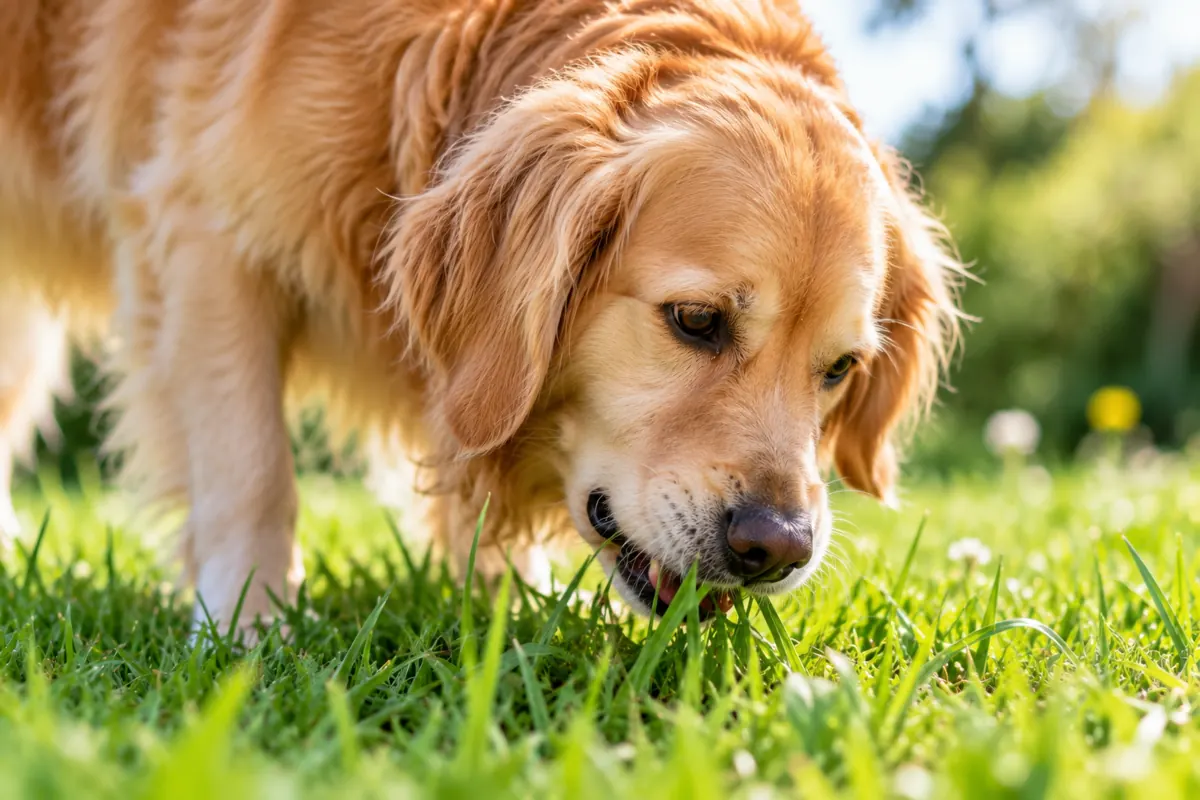
Start munching on the lawn!
It’s enough to make you wonder whether you’ve accidentally adopted a sheep. 🐑
But why do dogs eat grass? Are they feeling sick, missing something from their diet, or do they simply enjoy the taste?
Let’s separate the facts from the myths.
Absolutely!
Grass eating is a common behaviour in dogs, including those that are perfectly healthy and well fed.
Studies suggest that eating plants, particularly grass, is a normal part of canine behaviour.
Some dogs nibble occasionally, while others seem determined to mow the entire backyard!
And interestingly, dogs eating complete, balanced diets can be just as enthusiastic about grass as anyone else.
This is probably the biggest myth surrounding grass eating.
Many people believe dogs deliberately eat grass when they’re feeling sick because it helps them vomit.
But research suggests otherwise.
In a frequently cited study involving more than 1,500 dogs, only a small percentage were reported to appear unwell before eating plants, and fewer than one in four were reported to vomit frequently afterwards.
So although some dogs may eat grass when experiencing an upset stomach, most grass eating doesn’t appear to be an attempt to make themselves sick.
Another popular theory is that dogs eat grass because they’re lacking fibre, vitamins or minerals.
While nutritional factors could influence grass eating in some dogs, there’s little evidence that it generally indicates a nutritional deficiency.
Even dogs eating complete, balanced raw diets may enjoy the occasional mouthful of grass.
So if your dog is grazing in the garden, don’t immediately assume there’s something missing from their dinner.
Sometimes, grass is simply on the menu!
Here’s a wonderfully simple possibility.
Your dog might actually enjoy eating grass!
Dogs explore their surroundings using their noses and mouths, and fresh, tender grass may appeal to them.
Have you noticed your dog carefully selecting particular blades of grass?
Some dogs seem especially interested in fresh new growth.
Perhaps it’s the texture, the taste or simply the experience of grazing.
Whatever the reason, a little greenery appears to be quite appealing to some of our four-legged friends.
Possibly!
Plant material has been found in the diets of wild canids, suggesting that eating vegetation isn’t something domestic dogs have invented.
Researchers have proposed that grass eating may be an inherited, normal behaviour, although its precise evolutionary purpose remains uncertain.
So when your dog stops for a roadside salad, they may simply be displaying a behaviour that’s been around for generations.
For some dogs, grazing may be something they do while exploring or when there’s not much else happening.
Dogs need mental stimulation as well as physical exercise.
Sniffing games, puzzle feeders, appropriate natural chews and interesting walks can all provide enrichment.
But don’t assume that every grass-eating dog is bored.
Some perfectly entertained dogs still enjoy a good nibble!
Generally, occasional grass eating isn’t a problem for a healthy dog, provided the grass is free from harmful substances.
However, there are a few things to be aware of.
🌿 Lawn chemicals
Herbicides, pesticides and fertilisers can be harmful. Keep dogs away from treated lawns according to the product’s safety instructions.
🌿 Grass seeds
During spring and summer, sharp grass seeds can become lodged in paws, ears and skin, sometimes requiring veterinary treatment.
🌿 Parasites and contamination
Grass contaminated with animal faeces may expose dogs to parasites and other infectious organisms.
🌿 Toxic plants
Not everything growing in the garden is safe. Some ornamental plants are poisonous to dogs.
It’s best to discourage grazing in unfamiliar areas or anywhere chemicals may have been applied.
Occasional grazing is usually nothing to be concerned about.
However, contact your vet if your dog:
Repeated attempts to vomit without bringing anything up, particularly with a swollen abdomen, can indicate a life-threatening emergency and require immediate veterinary attention.
Not necessarily!
If your dog occasionally enjoys a little clean, untreated grass and is otherwise healthy, there’s usually no reason to panic.
Just make sure the area is safe and free from harmful chemicals or plants.
And if the behaviour suddenly changes or becomes excessive, investigate rather than simply assuming it’s normal.
So, why do dogs eat grass?
The answer is that we don’t know exactly why every dog does it.
Some may enjoy the taste, others may be exploring their environment, and for many, it’s simply a normal canine behaviour.
What we do know is that eating grass doesn’t automatically mean your dog is sick or missing nutrients.
So next time your dog stops for a little roadside salad, don’t be too surprised.
Apparently, even dedicated meat lovers enjoy their greens occasionally! 🥗🐶
From all of us at The Cats & Dogs Dinner Company — helping you keep your pets happy, healthy and naturally nourished. 💚