0
Items
$0.00

Ever feel like you haven’t had a moment alone since getting a dog?
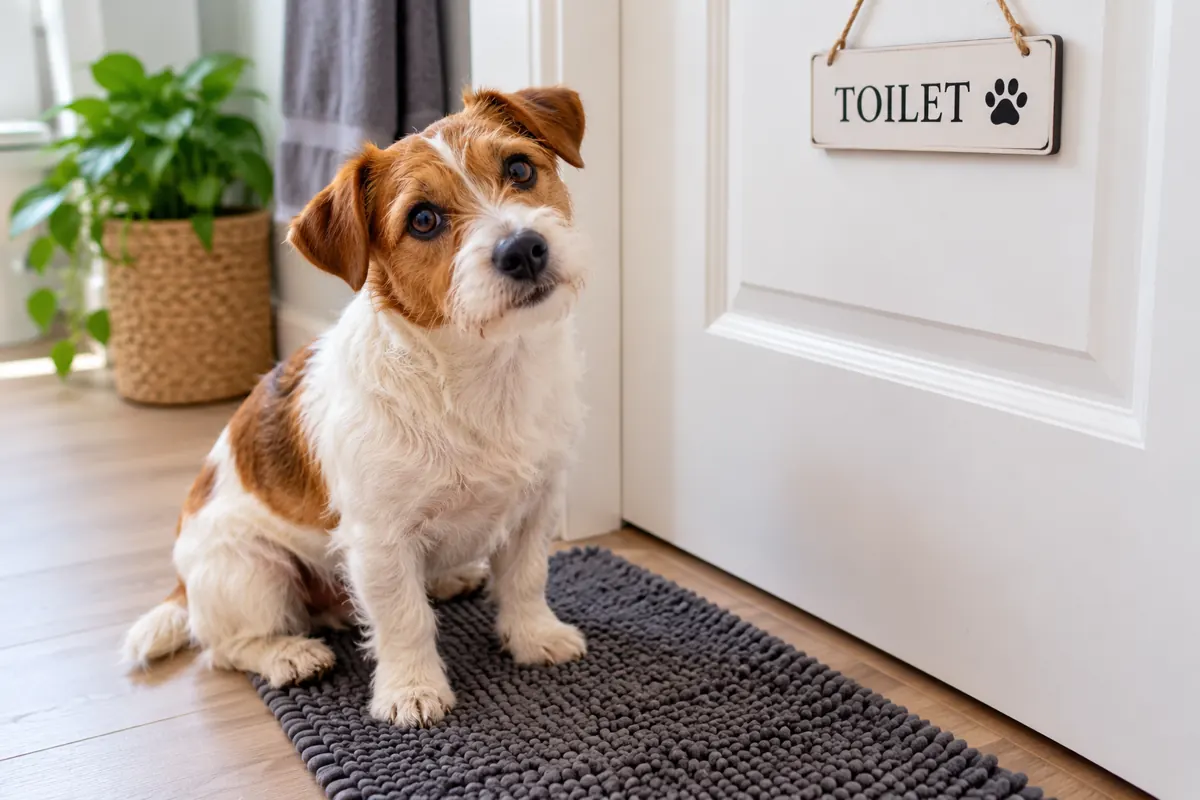
You head to the kitchen. Your dog follows. You go to the bedroom. There they are. You nip to the toilet, hoping for two minutes of peace, and suddenly you’ve got an audience.
Sound familiar?
Some dogs are so devoted to their humans that they seem to have appointed themselves full-time personal assistants. But why do they do it? Is it love, curiosity, habit, or something else?
Let’s investigate!
Dogs are social animals, and many genuinely enjoy being close to their humans.
To your dog, you’re not just the person who fills the food bowl. You’re companionship, security, entertainment and, quite possibly, the best thing in their world.
Following you around can simply be their way of saying, “Where you go, I go.”
And yes, that apparently includes the bathroom.
Dogs are brilliant at recognising routines.
Walk towards the kitchen? Perhaps there’s food.
Pick up your shoes? Could be walkies!
Head towards the front door? Something interesting might be happening.
Your dog has learnt that following you sometimes leads to good things, so why risk missing out?
It’s rather like having a furry little supervisor checking that you’re doing everything correctly.
Dogs quickly discover which behaviours get a response.
If following you results in a pat, a conversation, a treat or even a cheerful “Hello, you!”, they’re likely to keep doing it.
There’s nothing wrong with this, provided your dog is also comfortable spending time independently.
Certain dogs have been selectively bred to work closely alongside people.
Herding dogs, companion breeds and some working breeds may be particularly interested in where their humans are and what they’re doing.
However, every dog is an individual. You can have an independent little lapdog or a large, devoted shadow who thinks personal space is a ridiculous concept.
For some dogs, staying close to their favourite person provides reassurance.
This can be especially noticeable in puppies, rescue dogs, older dogs or dogs experiencing changes in their environment.
An older dog with declining hearing or eyesight may also prefer to keep you nearby because it helps them feel secure.
Here’s where it’s important to understand the difference between a loving shadow and a genuinely distressed dog.
Following you everywhere doesn’t automatically mean your dog has separation anxiety.
A dog who follows you around but happily settles when you’re busy or leaves the house without distress may simply enjoy your company.
However, watch for signs such as:
These behaviours can have several causes, so a veterinary assessment is a sensible first step. A qualified, reward-based behaviour professional may also help.
If your dog is happy, relaxed and not distressed when you’re apart, there’s usually no reason to worry about a little shadowing.
But it’s healthy for dogs to learn that they can relax without being beside you every second.
You can encourage independence by:
If your dog becomes distressed, don’t force them to cope with longer absences. Seek professional guidance and work at a pace they can manage.
Unfortunately, science hasn’t identified a special canine obsession with bathrooms!
The simplest explanation is often that your dog likes being with you, has learnt to follow your movements, or is curious about where you’re going.
And unlike humans, dogs don’t have quite the same understanding of bathroom privacy.
The Bottom Line
Most of the time, having a four-legged shadow is simply part of sharing your life with a dog.
As long as your dog is relaxed, confident and comfortable when you’re apart, there’s no need to discourage their affection.
And if your dog insists on supervising every bathroom visit?
Well, congratulations. You’ve officially lost your right to privacy.
From the team at The Cats & Dogs Dinner Company 🐾
Helping Kiwi pets live happy, healthy lives — one slightly embarrassing question at a time.